

Guide for Teachers and Parents

Dear Teachers and Parents,
to learn about the illness and about its potential effect on the child. This online edition of Uveitis: A Guide for Teachers and Parents contains the same information that appears in the published version. We have written this material to provide teachers and parents with information about uveitis and to suggest some guidelines for adapting the classroom and school setting. If you have a question, or would care to comment on our efforts, please post a note on this online forum. Uveitis (U’VE-I-TIS) is a rare, serious medical condition that affects vision. When a child has uveitis, it is important for teachers and for parents
Sincerely yours,
C. Stephen Foster, M.D.
Clinical Professor of Ophthalmology
Harvard Medical School
Getting Started
Please share this booklet with other school staff so everyone who has contact with this student is aware of his or her abilities and needs. We have found that the parents of children with uveitis are eager to work with school staff to ensure that their children achieve maximum potential, both academically and socially. We recommend, before or soon after the school year begins, that a meeting be held with the student’s parents. Go over the material in this booklet together. Make a plan. Invite any other school staff members who see your student on a regular basis. This may include the principal, PE teacher, vision specialist, and school nurse or bus driver. And, please, ask the parents to alert you to any problems that could affect the child’s performance and attitude. Throughout the school year, inform parents of changes in the child’s physical and emotional health, and urge them to communicate regularly with you, too.
What is uveitis?
Uveitis (U’VE-I-TIS) is a rare, serious medical condition that affects vision. Uveitis is inflammation deep inside the eye, in the middle layer of the eye that carries the blood supply to other parts of the eye. This middle layer of the eye is called the “uvea” (or uveal tract). Uveitis is like having inflammation from a burn, but inside the eye. Inflammation occurring inside the eye is a medical emergency. If not treated, vision loss will occur.
If you have never heard of uveitis, you are not alone. Uveitis occurs so rarely that it is unlikely your school has had even one other student with this illness. In the United States, for example, it is estimated that 11,500 children have uveitis and that 2,250 new cases are identified every year. Despite how rare it is, uveitis is the third leading cause of preventable blindness in the developed world.
Anatomy
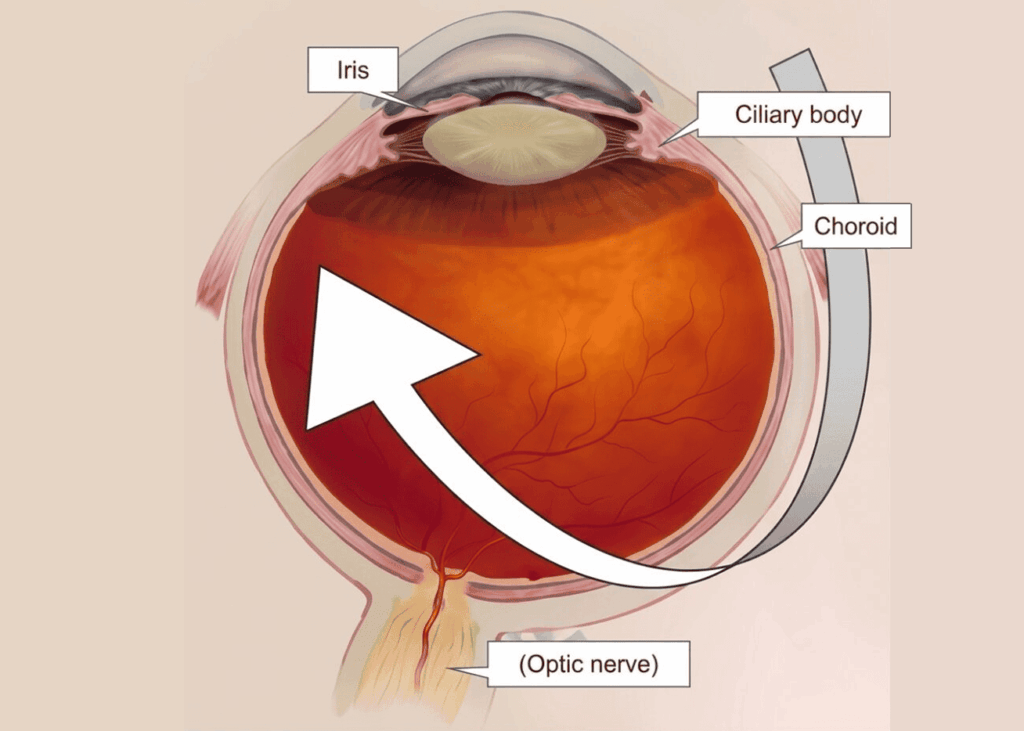
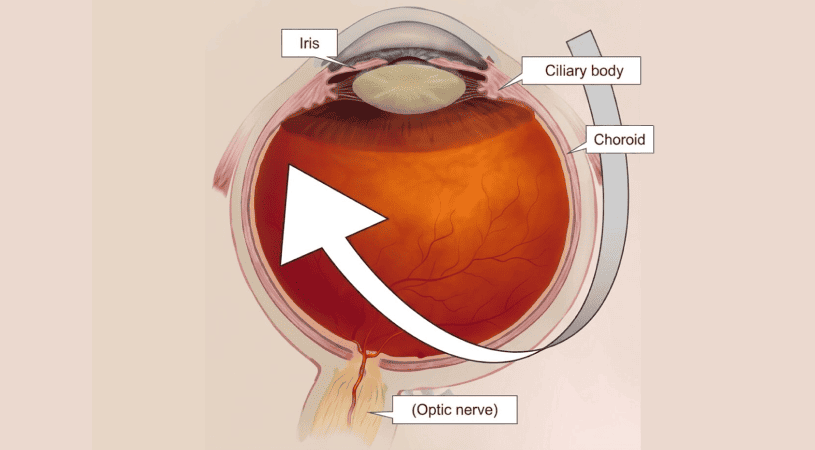
Uvea (u’ve’a) is the Latin word for grape. If you could see the uveal tract, it might remind you of a grape that has had its outer skin peeled away. The uvea is brown and round, with a “stem” formed by the optic nerve. “Itis” is the Latin suffix for inflammation. Put the two words together: uve + itis = “uveitis”. The uvea surrounds the eye like a tunic (coat). The visible part of the uvea is the iris.
The uveal tract has three main parts. The iris gives the eye its characteristic color. It changes shape to control the amount of light entering the eye. The ciliary body makes fluid for the inside of the eye. The choroid is very vascular and provides the blood supply for the eye. Inflammation affecting any of these parts of the eye is called uveitis.
Anatomy
Uvea (u’ve’a) is the Latin word for grape. If you could see the uveal tract, it might remind you of a grape that has had its outer skin peeled away. The uvea is brown and round, with a “stem” formed by the optic nerve. “Itis” is the Latin suffix for inflammation. Put the two words together: uve + itis = “uveitis”. The uvea surrounds the eye like a tunic (coat). The visible part of the uvea is the iris.
The uveal tract has three main parts. The iris gives the eye its characteristic color. It changes shape to control the amount of light entering the eye. The ciliary body makes fluid for the inside of the eye. The choroid is very vascular and provides the blood supply for the eye. Inflammation affecting any of these parts of the eye is called uveitis.
Who gets uveitis?
Uveitis is the third leading cause of preventable blindness in the developed world. Despite this, it is a rare disease. Uveitis can develop at any age. It is found in all races and occurs worldwide. It is not contagious. Patients with uveitis starting before the age of 16 years represent 5% to 10% of the all cases of uveitis.
Uveitis has an estimated prevalence of about 38 cases per 100,000 population, and an incidence of 15 cases per 100,000 population. 2,359,242 people in the world are estimated to have the disorder. In the United States it is estimated that uveitis afflicts 109,000 people and that 43,000 new cases are diagnosed each year. It is estimated that, at any one time, about 11,500 children in the United States will have uveitis and that 2,250 new cases are identified every year.
What are the Symptoms of Uveitis?
Uveitis symptoms include pain or redness in the eye, sensitivity to light (photophobia), blurred or diminished vision, problems with “glare”, seeing black spots (called “floaters”), and sometimes, abnormal eye movement or alignment. Children with uveitis are at increased risk for developing glaucoma and cataract. Some children with uveitis will become blind. Most children with uveitis will require years of medical treatment in an effort to save their vision. Roughly half of the children with uveitis will not have symptoms to warn them of disease activity. In this instance, the uveitis is usually discovered after there has been irreversible vision loss caused by damage to the retina or optic nerve.
How is Vision Affected by Uveitis?
Vision will always be affected when there is inflammation inside the eye. How vision will be affected depends on how severe the inflammation is, how long the inflammation has gone uncontrolled, whether the student is having a “flare” up of symptoms (whether the illness is active or in remission), whether complications such as glaucoma or cataract have developed, and what treatment the child is receiving. As you might imagine, it can get pretty complicated.
Vision may fluctuate from relatively “normal” to very poor. Children with uveitis may be able to read with little assistance one month and then may need adaptive text the next. Or, the visual problems may be relatively stable and predictable. Glare can be a big problem inside and out of doors. Communication with the child’s family is crucial to understanding how your particular student is doing and what specific adaptations will need to be implemented.